

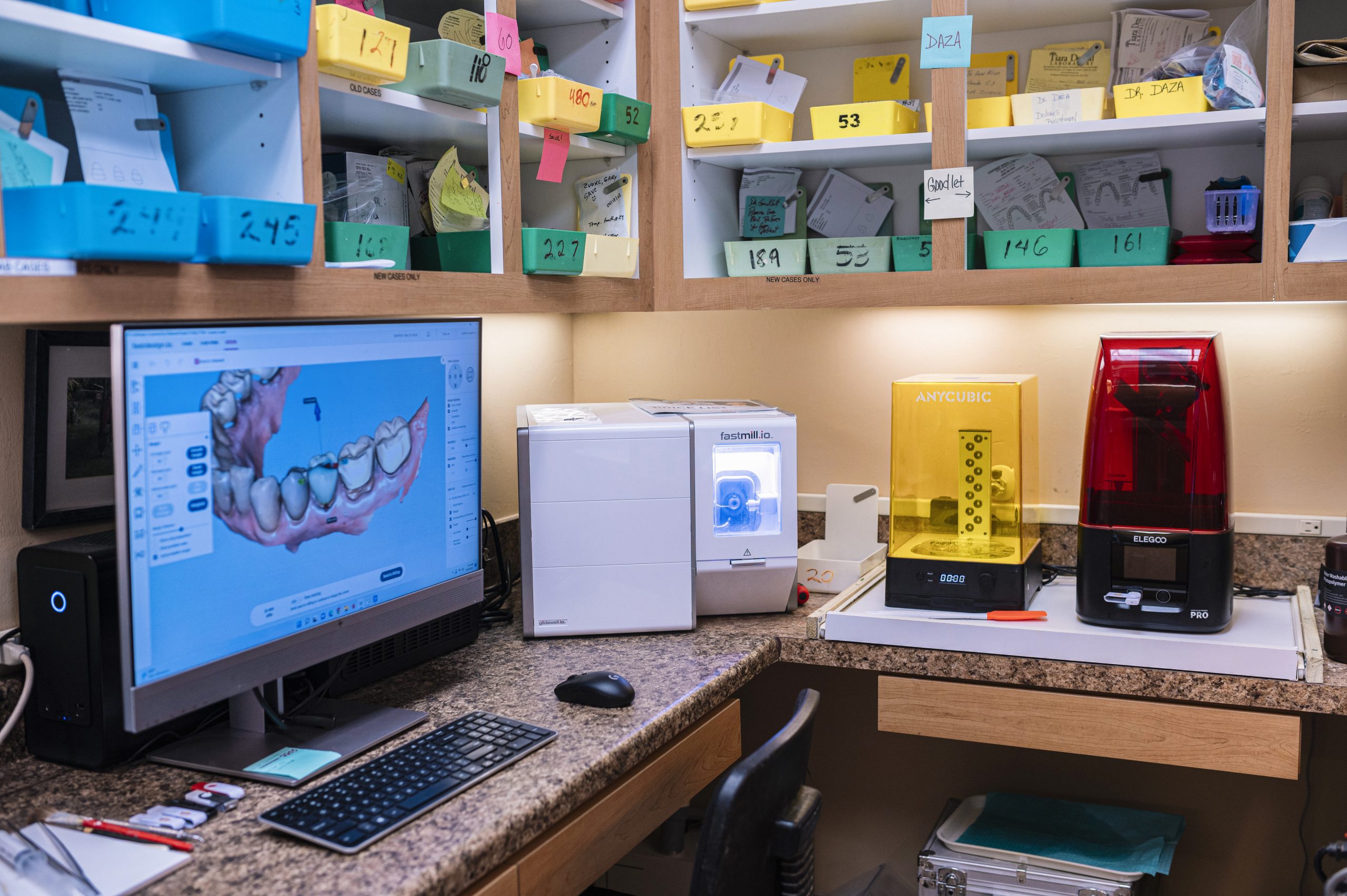
The empty space where a tooth used to be can turn everyday moments like enjoying a meal with family or confidently speaking in meetings into sources of constant worry and self-consciousness. Suncoast Dental Center in Naples, Florida has been helping patients restore their smiles with dental bridges since 1982, combining over four decades of family-focused care with modern digital fabrication capabilities. Our in-house dental lab and advanced 3D scanning technology allow us to create custom solutions that look natural and function seamlessly with your existing teeth.
Bridges
Understanding Dental Bridges
A dental bridge is a fixed restoration that replaces one or more missing teeth by literally bridging the gap in your smile. The replacement tooth, called a pontic, sits where your natural tooth used to be and is held in place by attachments to the teeth on either side of the space. These supporting teeth, known as abutment teeth, anchor the bridge so it stays secure during eating, speaking, or smiling. Unlike removable dentures that you take out at night, bridges become a permanent part of your mouth and are custom-crafted to match the color, shape, and size of your natural teeth.
Benefits of Dental Bridges
A dental bridge is one of the most reliable and time-tested solutions for replacing one or more missing teeth. At Suncoast Dental Center, we custom-craft each bridge to blend seamlessly with your natural teeth, restoring both function and appearance in a way that feels comfortable and looks completely natural. Whether you are missing a single tooth or need to close a larger gap, a bridge can give you back the confidence and capability of a complete smile.
Restores Complete Chewing Function
A dental bridge allows you to enjoy all your favorite foods again without discomfort or difficulty. You can bite into a crisp apple, chew steak, and eat a varied, nutritious diet without restrictions. The bridge provides stability and durability that makes eating feel natural again. This restoration enables you to chew effectively on both sides of your mouth, distributing pressure evenly across your teeth.
Tooth Loss Leads to Measurable Decline in Chewing Efficiency and Dietary Quality
Research consistently links tooth loss with a decline in the ability to chew effectively, which can affect nutritional intake over time. A dental bridge restores the functional surface needed to distribute chewing forces properly and eat comfortably.
Source: Biffar et al. (2024), International Journal of Environmental Research and Public Health – published via NIH/PubMed Central
Prevents Surrounding Teeth From Shifting
After losing a tooth, the adjacent teeth naturally begin to drift into the empty space over time. This shifting can create alignment problems, affect your bite, and lead to jaw pain or temporomandibular joint disorders. A dental bridge fills the gap and provides support to adjacent teeth, keeping them in their proper positions. This preventive measure protects your overall oral health and maintains the alignment you currently have.
Untreated Tooth Loss Can Trigger a Chain of Shifting, Crowding, and Bite Complications
Once a tooth is lost and the gap is left unfilled, neighboring teeth begin to migrate into the empty space, a process that can quietly disrupt the entire bite over time. A peer-reviewed study published via NIH/PubMed Central confirmed that untreated tooth loss may lead to complex restorative interventions as a direct result of drifting and over-eruption of adjacent teeth.
Source: Alharbi et al. (2024), BMC Oral Health – published via NIH/PubMed Central
Maintains Your Facial Structure
The underlying jawbone begins to deteriorate after tooth loss because it no longer receives stimulation from tooth roots. A bridge helps maintain your facial proportions by supporting your lips and cheeks from the inside. Without this support, your face can develop a sunken appearance that makes you look older than your actual age. The restoration helps preserve your natural facial contours and keeps your smile looking youthful.
Untreated Tooth Loss Can Trigger a Chain of Shifting, Crowding, and Bite Complications
Once a tooth is lost and the gap is left unfilled, neighboring teeth begin to migrate into the empty space, a process that can quietly disrupt the entire bite over time. A peer-reviewed study published via NIH/PubMed Central confirmed that untreated tooth loss may lead to complex restorative interventions as a direct result of drifting and over-eruption of adjacent teeth.
Source: Alharbi et al. (2024), BMC Oral Health – published via NIH/PubMed Central
Improves Speech Clarity
Missing teeth, especially front teeth, can affect how you pronounce certain words and sounds. You might notice whistling, slurring, or difficulty articulating specific consonants and vowels clearly. A dental bridge eliminates these speech impediments by filling the gap and providing the proper surface for your tongue to work against. Most patients notice immediate improvement in their speech clarity after bridge placement.
Prosthetic Rehabilitation After Tooth Loss Produces Statistically Significant Improvements in Speech
Clinical research has confirmed that restoring missing anterior teeth with a prosthetic appliance produces measurable improvements in speech sound articulation. A peer-reviewed study published via PubMed found statistically significant correction across multiple speech sounds immediately following prosthetic rehabilitation.
Source: Kalia et al. (2018), Journal of Indian Society of Pedodontics and Preventive Dentistry – published via PubMed/NIH
Boosts Confidence in Social Situations
Visible gaps in your smile can make you feel self-conscious during everyday interactions like business meetings, social gatherings, or simply chatting with friends. Many patients with missing teeth develop habits of covering their mouths during laughter or speech. A custom bridge eliminates these visible gaps immediately, allowing you to smile freely without worrying about what others notice. The psychological boost that comes with a complete smile often surprises patients more than the functional improvements.
Low Self-Esteem Related to Tooth Loss Can Affect the Ability to Socialize and Perform Daily Activities
The psychological impact of tooth loss extends well beyond appearance. A peer-reviewed study published via NIH/PubMed Central found that low self-esteem related to tooth loss can limit a person’s ability to socialize and engage in daily activities, underscoring how meaningful smile restoration can be for overall wellbeing.
Source: Goyal et al. (2017), Journal of Clinical and Diagnostic Research – published via NIH/PubMed Central
Risks of Delaying Dental Bridge Treatment
A missing tooth may not feel urgent in the moment, but the longer the gap goes unfilled, the more the surrounding teeth, bone, and bite are affected. What starts as a single missing tooth can gradually become a much more involved treatment situation.
Delaying a Bridge Allows Neighboring Teeth to Drift, Often Requiring Costlier Correction Down the Line
When adjacent teeth shift into the empty space left by a missing tooth, the straightforward window for a simple bridge can close. Drifted or tipped teeth may require orthodontic preparation or additional restorative work before a bridge can even be placed, significantly increasing the total cost and time involved in treatment. Addressing the gap while the surrounding teeth are still in position is almost always the more affordable path.
An Unfilled Gap Creates an Environment Where Decay and Gum Disease Are More Likely to Develop
The space left by a missing tooth can trap food and bacteria in ways that are difficult to clean around, raising the risk of decay in neighboring teeth and gum inflammation along the exposed ridge. Over time, these conditions can compromise the very teeth that would serve as anchors for a future bridge, narrowing the available options for restoration and making treatment more complex.
Bone Loss Beneath an Untreated Gap Progresses Over Time and Can Complicate Future Dental Work
Once a tooth is lost, the jawbone beneath it begins to lose density without the stimulation of a tooth root. The longer a gap remains untreated, the more bone volume is lost in that area, which can affect the stability of neighboring teeth and limit options for future restoration. Catching the gap early gives Dr. Lowell the best foundation to work with for a strong, lasting result.
Why Choose Us for Bridges
Our practice has over four decades of hands-on experience with dental bridge restorations. Dr. Landon Lowell personally oversees each step of your bridge procedure, ensuring precision and attention to detail that corporate dental chains simply can’t match. Our in-house dental lab sets us apart by giving us complete control over the quality and timeline of your restoration. We fabricate bridges faster than practices that outsource to commercial labs, and we can make adjustments immediately if needed. The same advanced 3D printers, CBCT imaging, and digital scanners we use for same-day crowns help us achieve exceptional accuracy in bridge construction.
Our team never rushes appointments or pressures you to accept treatment you don’t need. We take the time to explain all your options clearly, show you exactly what we see using intraoral cameras, and let you make informed decisions about your dental health. This patient-first philosophy, combined with our long-tenured staff who genuinely care about your comfort, creates an experience that keeps families coming back to Suncoast Dental Center generation after generation.

FAQs
What is a dental bridge?
A dental bridge is a fixed dental restoration that replaces one or more missing teeth by anchoring a replacement tooth to the natural teeth on either side of the gap. The supporting teeth, called abutments, hold the bridge securely in place so it doesn’t move during eating or speaking. Bridges are custom-made to match your natural teeth in color, shape, and size, creating a seamless appearance that restores both function and aesthetics.
Can a dental bridge be removed and recemented?
Dental bridges can sometimes be removed and recemented if they become loose or need adjustments, though this isn’t always possible or advisable. The success of recementing depends on the condition of the bridge, the supporting teeth, and why the bridge came loose in the first place. If decay has developed on the abutment teeth or the bridge has been damaged, you may need a new restoration rather than recementing the existing one.
Is a dental bridge permanent?
A dental bridge is considered a permanent restoration because it’s cemented into place and cannot be removed by the patient like dentures. The bridge stays fixed in your mouth 24/7, becoming a stable part of your dental structure. However, “permanent” refers to the attachment method rather than lifetime duration. Bridges will eventually need replacement due to normal wear or changes in your oral health over time.
How long does a dental bridge last?
Most dental bridges last between 5 to 15 years before requiring replacement. The actual lifespan varies based on the bridge location in your mouth, the amount of chewing pressure it receives, and the materials used in its construction. Bridges placed on back teeth that handle heavy chewing forces typically wear faster than those replacing front teeth, while high-quality materials like porcelain fused to metal tend to outlast all-resin options.
How to clean dental bridges?
Cleaning a dental bridge requires daily brushing twice a day with fluoride toothpaste, just like your natural teeth. You’ll also need to floss daily using a floss threader or special bridge floss to clean under the pontic and around the abutment teeth where regular floss can’t reach. An interdental brush or water flosser can help remove food particles and plaque from hard-to-reach areas around the bridge.
Refresh Your Smile with Our Custom Dental Bridges
A dental bridge can give you back the ability to eat comfortably, speak clearly, and smile confidently in every situation you encounter. Dr. Landon Lowell and our dedicated team at Suncoast Dental Center are ready to evaluate your specific needs and create a restoration that looks natural, functions perfectly, and lasts for years. We’ll walk you through every option available and help you select the bridge type that fits your goals and lifestyle best. Reach our team at 239-566-2255 to begin your bridge consultation, and get easy directions to our Naples office with Google Maps. Check out our Facebook and Instagram pages to see real patient results and learn more about how we’re different from other dental practices in the area.
